1. Wear and Tear Issues Due to Physical Contact
The most fundamental disadvantage of contact-based distance measuring sensors (such as potentiometric, resistive, inductive, and mechanical limit switch types) lies in their mandatory physical contact with the measured object to complete the measurement. This contact-based operating mechanism inevitably leads to mechanical wear on the sensor's probe, contact head, or sliding components during long-term operation. Particularly in high-frequency measurement or continuous monitoring scenarios, friction gradually consumes the contact surfaces, resulting in decreased measurement accuracy, signal drift, and even mechanical failure. In contrast, ultrasonic sensors employ a non-contact measurement principle, calculating distance by transmitting and receiving ultrasonic pulses without any physical contact between the probe and the measured object. Consequently, they are free from mechanical wear problems, typically offer longer service life, and require less maintenance.
2. Potential Damage to the Surface of the Measured Object
Since contact-based sensors must touch the target being measured, they may cause scratches, indentations, or contamination on the object's surface in certain application scenarios. For example, when measuring sensitive objects such as precision optical lenses, polished metal surfaces, thin-film materials, or food packaging, the mechanical touch of contact-based sensors may damage the product's appearance or affect its quality. Ultrasonic sensors, however, perform measurements through acoustic wave propagation without exerting any physical influence on the measured object's surface. This makes them particularly suitable for fragile, easily deformable, or surface-quality-critical targets.
3. Limited Measurement Range
The measurement range of contact-based distance sensors is typically strictly constrained by mechanical structure. For instance, the stroke of a linear displacement sensor depends on the physical length of its guide rail or resistive element; beyond this range, the sensor will either fail to operate or suffer mechanical damage. Ultrasonic sensors offer relatively flexible measurement ranges. By adjusting the emission power and reception sensitivity of the ultrasonic waves, they can achieve distance measurements from a few centimeters to several meters or even beyond ten meters, far exceeding the coverage of most contact-based sensors.
4. Insufficient Dynamic Response Performance
Due to the presence of mechanical transmission components (such as springs, levers, and sliders), the dynamic response speed of contact-based sensors is constrained by mechanical inertia and friction, making it difficult to achieve high-speed real-time measurement. When measuring rapidly moving or vibrating targets, the mechanical components may be unable to follow the target's motion in time, leading to measurement lag or distortion. Although ultrasonic sensors are limited by the propagation speed of sound waves, their electronic signal processing speed is extremely fast, and they are not subject to mechanical inertia issues. Therefore, they generally perform better in dynamic measurement scenarios.
5. Poor Environmental Adaptability
The performance of contact-based sensors is easily affected by ambient temperature, humidity, dust, oil contamination, and corrosive media. For example, dust and oil may accumulate on sliding tracks, increasing frictional resistance and causing jamming; humid or corrosive environments may oxidize or rust metal contacts, affecting electrical performance. While ultrasonic sensors are also influenced to some extent by ambient temperature (which affects the speed of sound) and air currents, their probes can typically be hermetically sealed, resulting in a more robust overall structure. Their adaptability in harsh industrial environments (such as high-dust, high-humidity, or oil-contaminated conditions) is significantly superior to that of contact-based sensors.
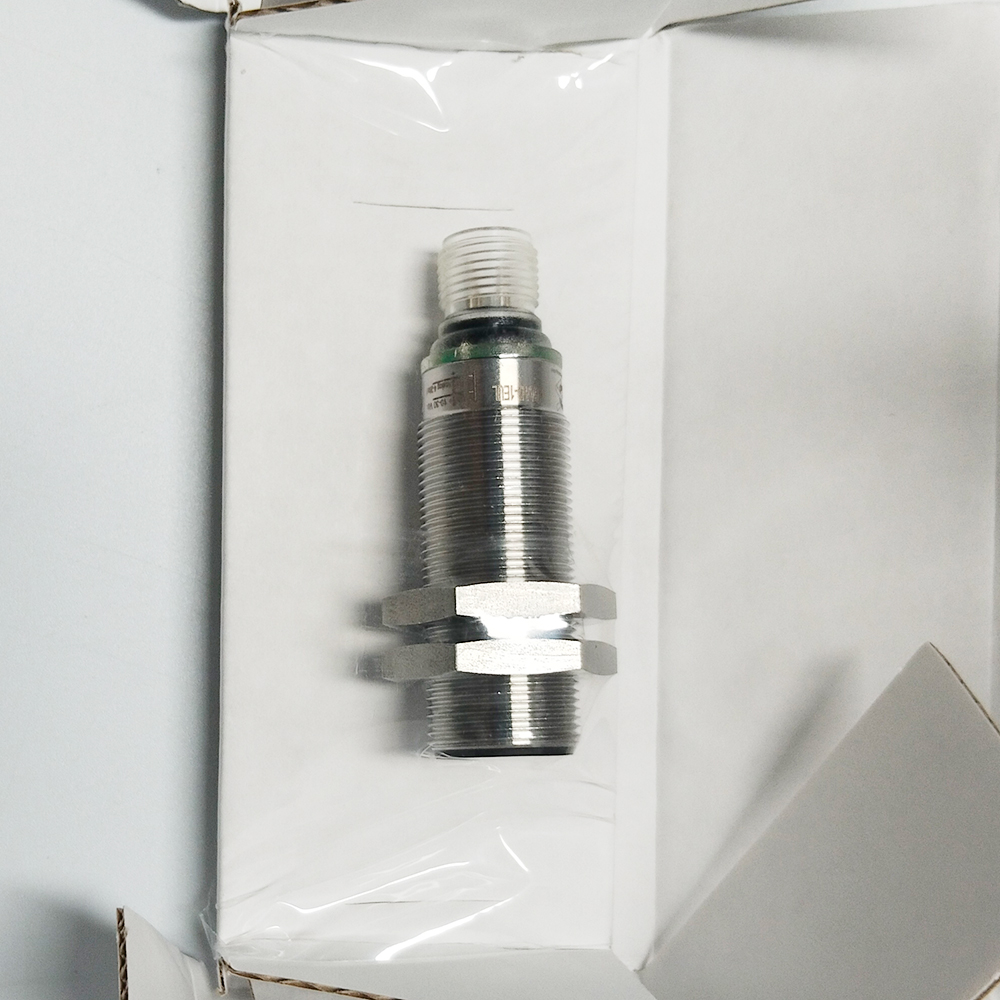
6. Measurement Dead Zones and Installation Constraints
Contact-based sensors require specific contact positions and orientations with the measured object, and their installation is often strictly limited by spatial layout. Certain contact-based sensors also exhibit measurement dead zones, meaning they cannot measure distances that are too short or too long. Ultrasonic sensors also have certain blind zones (where emitted and reflected waves cannot be distinguished at very close distances), but their installation is more flexible. They can be aimed at the measured target from various angles without needing to consider the direction of contact force.
7. Limitations in Accuracy and Repeatability
While some high-precision contact-based sensors (such as linear encoders paired with contact probes) can achieve very high measurement accuracy, ordinary contact-based distance sensors suffer from mechanical gaps, elastic deformation, and uncertainties in friction force. These factors make it difficult to guarantee repeatability in repeated measurements. Slight variations in contact force, angle, and position during each measurement can translate into measurement errors. Although ultrasonic sensors are affected by environmental factors (such as temperature and air density) and require compensation, their measurement principle is based on the Time-of-Flight (ToF) method, which offers good repeatability and is free from random errors caused by inconsistent mechanical contact.
8. Maintenance Costs and Calibration Requirements
Due to mechanical wear, contact-based sensors require regular cleaning, lubrication, calibration, and even replacement of wear parts, resulting in relatively high maintenance costs. In automated production lines or equipment that is difficult to shut down, this maintenance demand significantly increases operating costs and downtime. Ultrasonic sensors feature a simple structure with no moving parts; routine maintenance is mainly limited to cleaning the probe surface. The maintenance workload is small, and the comprehensive cost of long-term use offers a distinct advantage.
9. Limitations in Applicable Scenarios
Contact-based sensors cannot measure targets with high temperature, high pressure, or strongly corrosive or radioactive characteristics, as direct contact may damage the sensor itself or pose safety risks to operators. Ultrasonic sensors can complete measurements from a safe distance, making them more suitable for these special working conditions. Furthermore, for soft, easily deformable, or irregularly shaped objects, contact-based measurement may introduce errors due to object deformation caused by contact force, whereas the non-contact nature of ultrasonic measurement can effectively avoid this problem.
In summary, the main disadvantages of contact-based distance measuring sensors compared to ultrasonic sensors include: wear and shortened lifespan due to physical contact, potential damage to the measured object's surface, limited measurement range, insufficient dynamic response performance, poor environmental adaptability, lack of installation flexibility, repeatability affected by mechanical factors, high maintenance costs, and restricted applicable scenarios. Therefore, in modern industrial automation, intelligent manufacturing, and non-destructive testing fields, non-contact measurement technologies (including ultrasonic, laser, infrared, etc.) are gradually replacing traditional contact-based measurement solutions and becoming the mainstream choice for distance and displacement monitoring. Of course, contact-based sensors still possess irreplaceable advantages in certain specific scenarios (such as when precise contact force sensing is required, or when the measurement environment is extremely harsh and acoustic wave propagation is obstructed). However, in most conventional distance measurement applications, their disadvantages render them significantly less competitive than ultrasonic sensors.


